I arrived back at my hotel exhausted but exhilarated after a day seeing first-hand how organic, sustainably produced cocoa is grown in the Peruvian jungle. A few hours’ sleep later, it was time for another early start.
The first part of this journey had taken me into the cocoa-growing landscapes of San Martín in the north of the country. Now I was heading south along the Pacific coast highway towards Pisco, home to Machu Picchu Foods’ main manufacturing facility.
Under a blanket of fog, the scenery became increasingly arid and desolate. The lush forests of the Amazon felt a long way away.
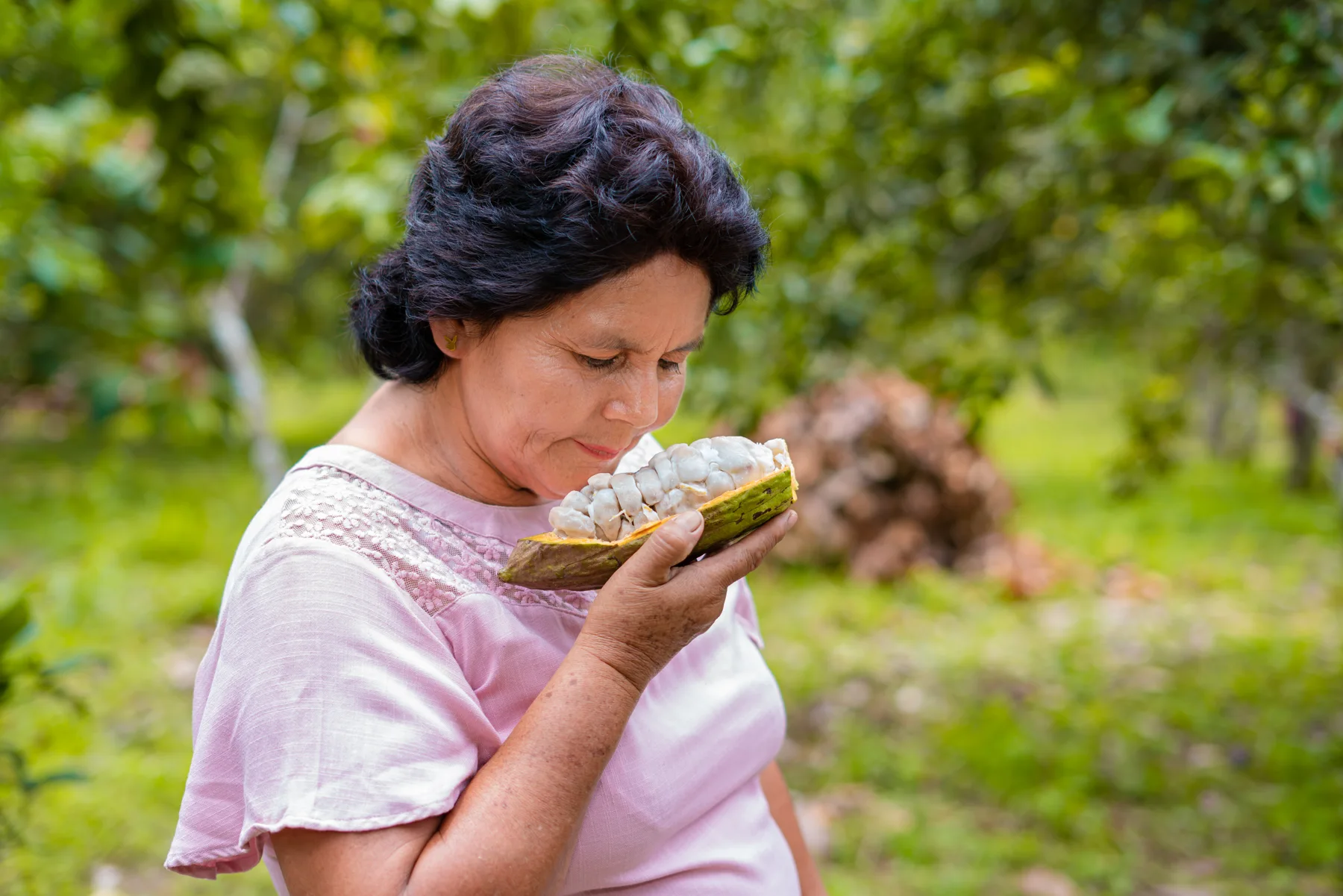
The 230-kilometre road journey takes around three and a half hours. For the trucks carrying cocoa beans from collection centres around Tarapoto in the forests, the trip to Pisco can take three days, company representatives told me. Mountainous terrain and restrictions on drivers’ working hours account for part of that time.
Before any discussion of grinding capacity or product development, there was this physical challenge: beans grown and collected in remote tropical regions must cross the Andes to reach the coast, where they can be processed and shipped to international customers.
From Farmer to Consumer
Pisco is both a port and an industrial centre, although internationally it remains better known for the grape spirit that gives Peru’s national cocktail its name.
At the factory, a Machu Picchu Foods representative summed up the company’s operating model as ‘from farmer to consumer’.
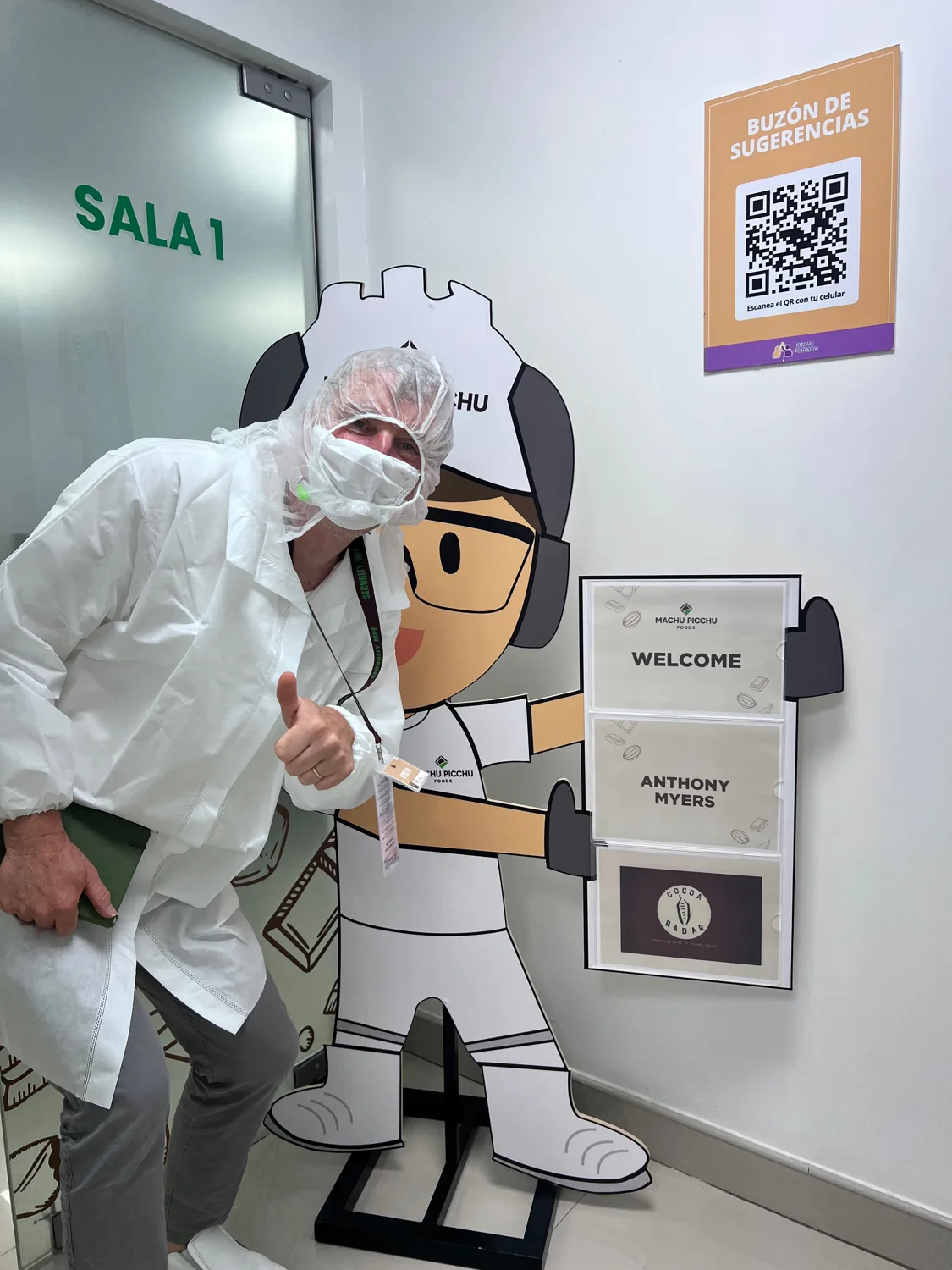
Behind that statement is a sizeable sourcing operation. Machu Picchu Foods (MPF) said it has 26 years of experience in the food industry and works with approximately 15,000 cocoa-farming families through more than 30 collection centres involved in cocoa collection or production.
The company puts its annual cocoa purchases at approximately 54,000 tonnes, equivalent to about 30% of Peru’s harvest. Its stated aim is to connect the sustainable development of Peru’s cocoa-producing communities with the growth of customers in international cocoa and confectionery markets.
Pisco is where those beans enter the next stage of the chain.
The Journey in Numbers
- TransportAround three days
The truck journey from collection centres around Tarapoto to Pisco, according to company representatives.
- Annual purchasesApproximately 54,000 tonnes
MPF’s stated annual cocoa purchases, equivalent to about 30% of Peru’s harvest.
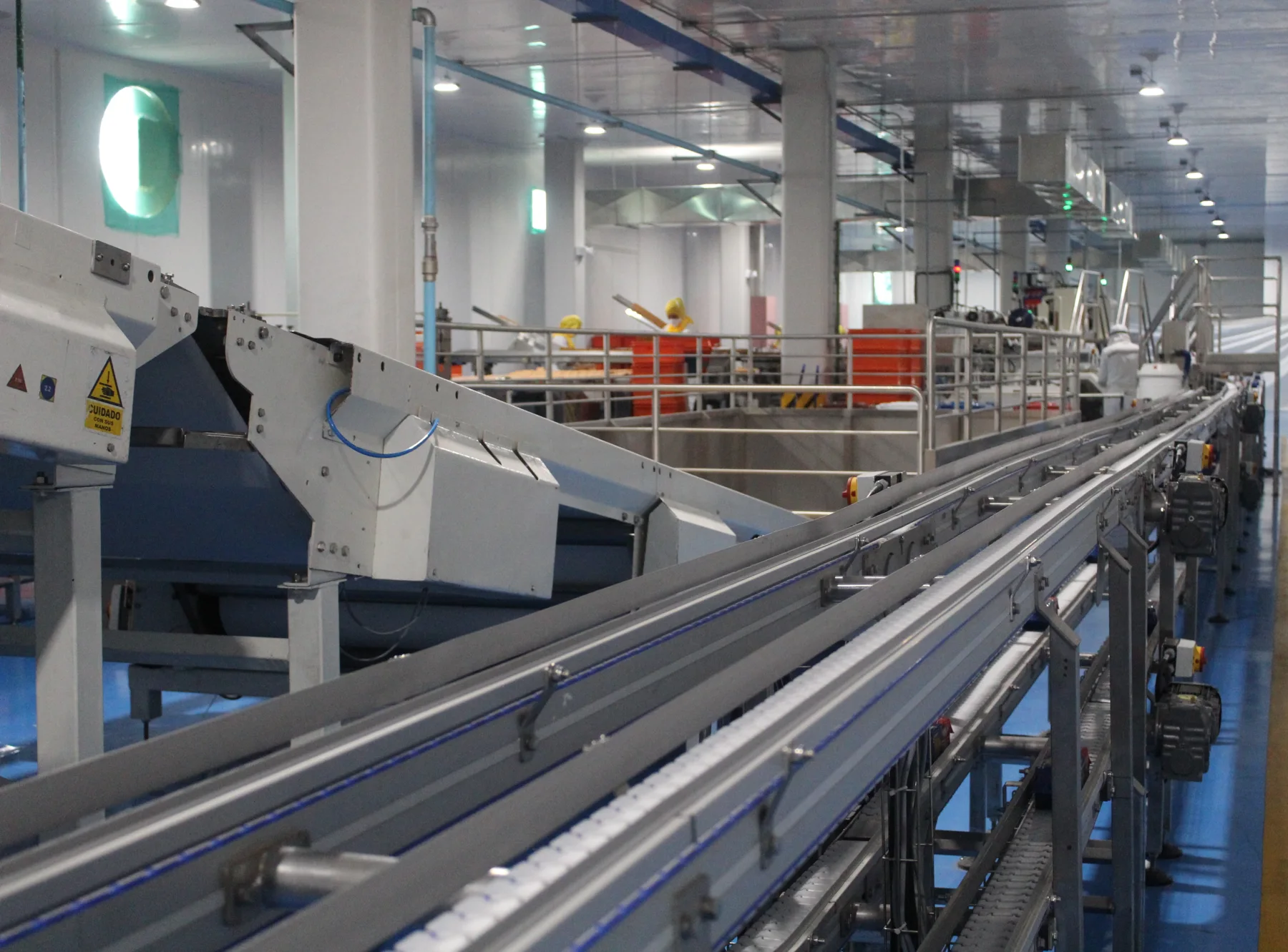
- Grinding capacity52,500 tonnes a year
The Pisco factory’s stated cocoa-grinding capacity.
- 2027 target72,000 tonnes a year
The capacity the company expects to reach by 2027 following substantial investment.
Beyond the Bean
The Pisco site processes cocoa into liquor, butter and powder. Its range includes natural and alkalised powders for different customer applications and export markets.
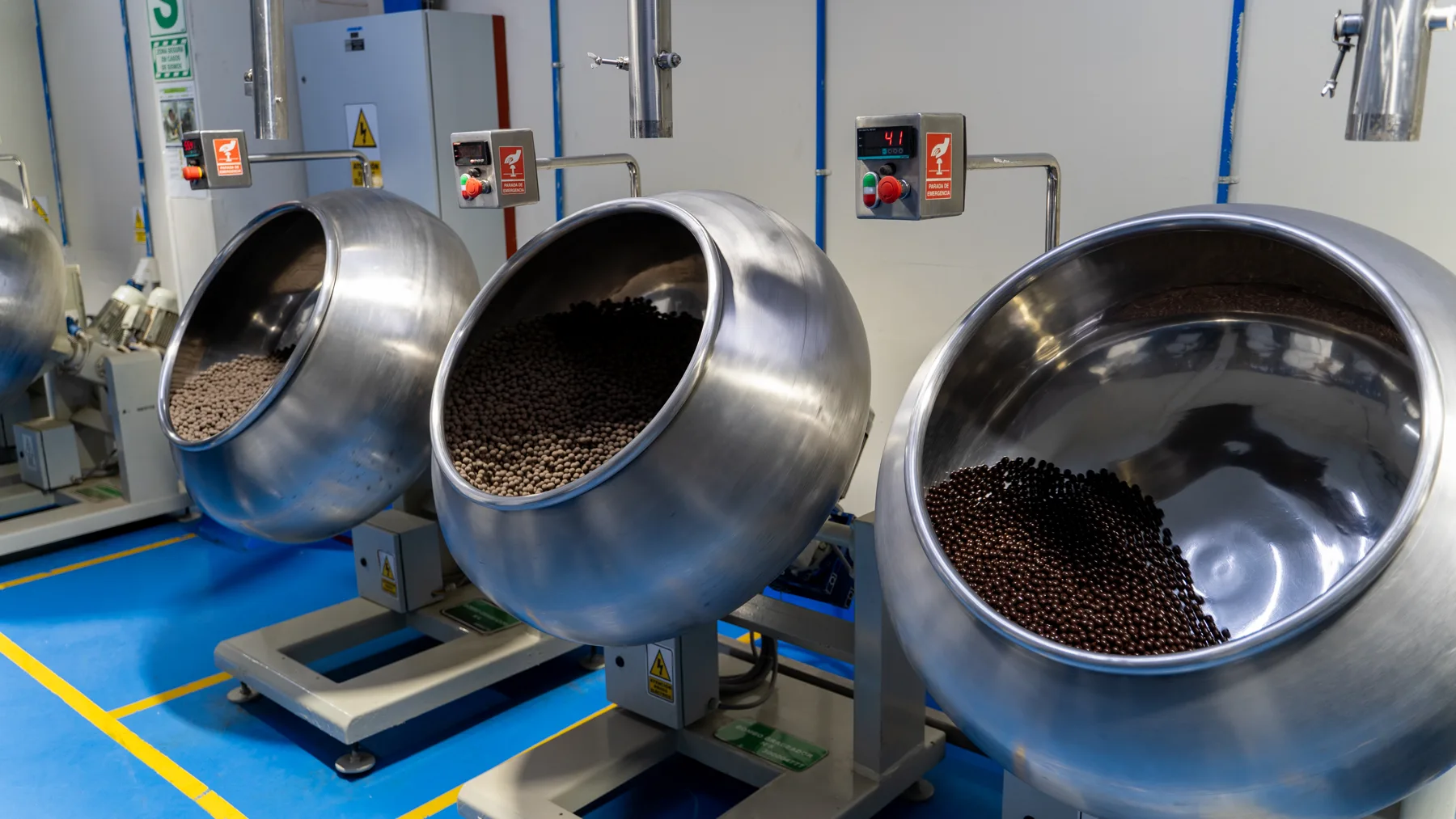
Chocolate production spans drops, bars, chunks and kibbles, alongside products made on moulding and panning lines. The company said it supplies both bulk and retail formats.
The breadth of the operation shows how MPF is seeking to retain more value from Peruvian cocoa. Collecting and exporting beans is one part of its business; converting them into ingredients and finished products to customers’ technical requirements is another.
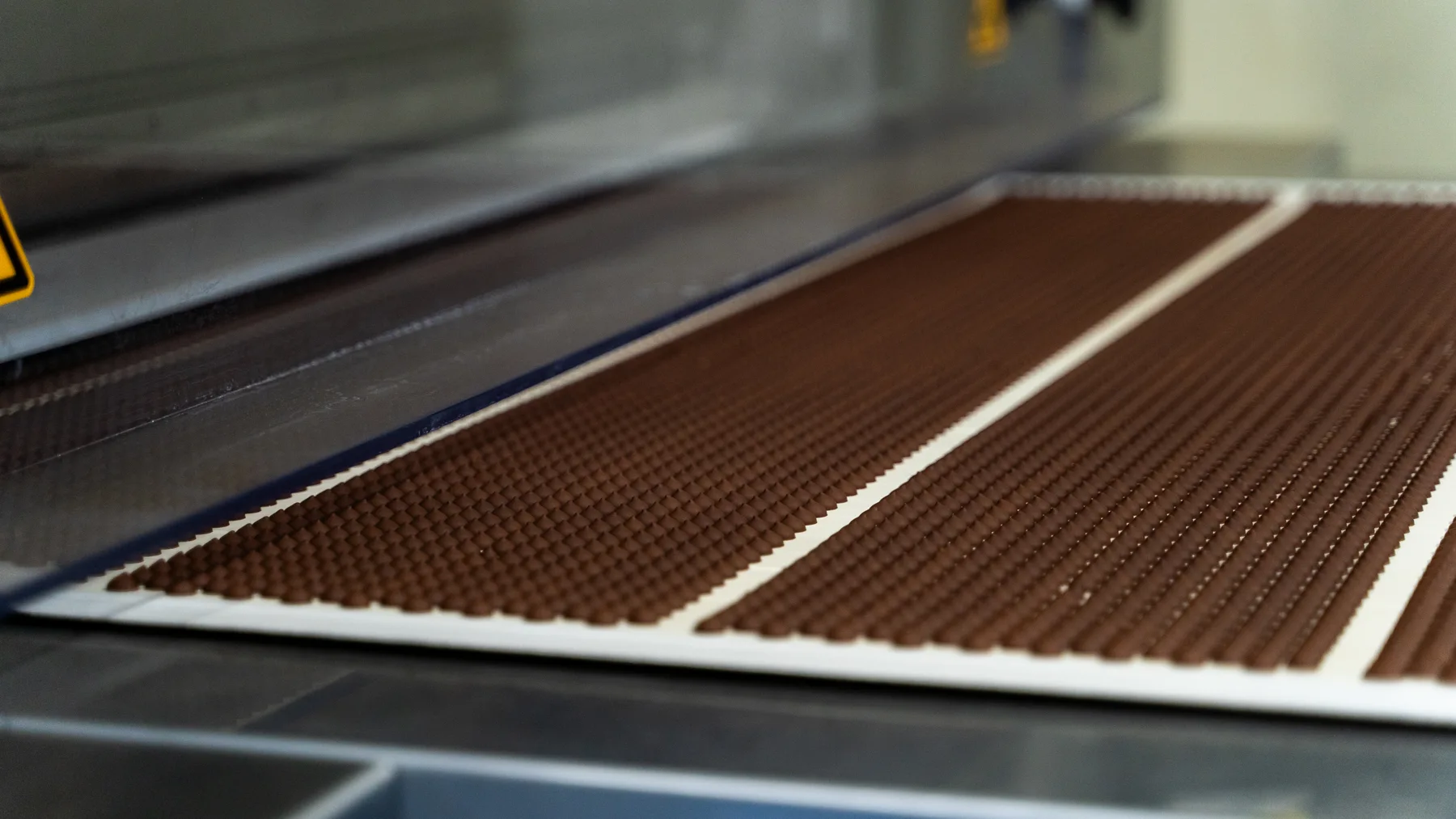
That shift brings its own demands. Much of the factory presentation concerned the controls needed to produce consistently and demonstrate that each product meets its specification.
Every Result Recorded
MPF described a quality assurance system covering production from the receipt of raw materials to the release of finished products.
Checks begin when raw materials arrive, with verification against technical specifications and certificates of analysis. “We record every single result that we have in our internal laboratory,” a staff member said.
The company said its in-house laboratory evaluates raw materials, products during processing and finished goods. Its work includes sensory, physicochemical and microbiological testing, using standardised, internationally recognised methodologies, including AOAC and ISO methods.
“We check every step of the process,” the quality representative said.
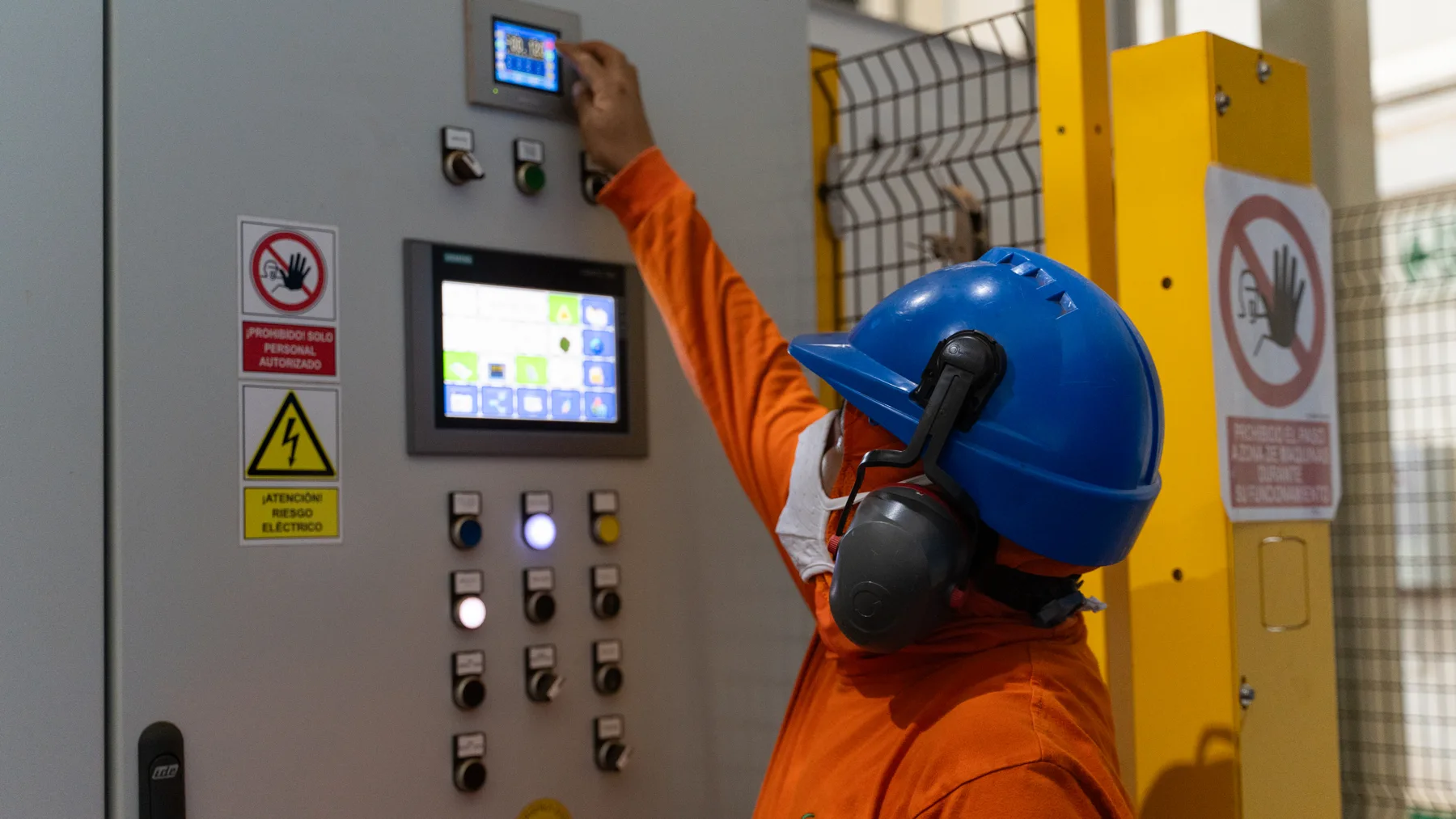
Before release, finished products are reviewed against the technical specifications agreed with individual customers. The company also described equipment calibration, duplicate testing, reference samples and records of laboratory conditions as measures supporting the reliability and traceability of results.
Food-safety controls presented during the visit included monitoring for microbiological hazards such as Salmonella, foreign-body detection, sanitation, cleaning, pest control and environmental sampling.
Raw materials, other inputs and finished products have dedicated storage areas. MPF said it monitors processing parameters to detect deviations and isolate affected material before it compromises other production lots.
The company also said it can trace incoming raw materials through to finished products. For products carrying organic, dietary or other market-specific certifications, that requires both physical segregation and accurate documentation.
Mapping Cadmium
Cadmium was another focus of the quality presentation.
The metal occurs naturally in the soils of some cocoa-growing regions. Regulatory limits can determine whether cocoa and chocolate are suitable for particular export markets.
MPF said it analyses incoming cocoa and uses the results to build a picture of cadmium distribution across its sourcing areas. That information can help guide customers towards raw materials that meet their specifications or the requirements of a destination market.
CocoaRadar has reported separately on the company’s cadmium risk map for Peru’s cocoa supply.
The company said its regulatory team monitors rules in Peru, the European Union and the United States, including requirements applying in California. Individual customers may set additional conditions beyond statutory limits.
A day earlier, I had been standing among cocoa trees, discussing farming, sustainability and the realities of production in the forest. In Pisco, those conversations had become truck journeys, tonnes of grinding capacity, laboratory results and export specifications.
The contrast was dramatic. The connection was direct.
A day earlier, I had been standing among cocoa trees. In Pisco, those conversations had become truck journeys, tonnes of grinding capacity, laboratory results and export specifications.
MPF presents itself as a bridge between Peru’s cocoa-producing communities and international customers. Pisco is where that proposition faces a practical test: processing cocoa consistently, documenting it accurately and delivering it in forms that meet the technical and regulatory demands of export markets.
After the visit, there was time for a pisco cocktail before dinner: pollo a la brasa, Peru’s iconic roast chicken dish. It closed a day spent following cocoa from the country’s remote growing regions to one of its principal industrial gateways.
Callao: What Comes Next?
At MPF’s 28,100-square-metre factory in Callao, on the outskirts of Lima, the emphasis shifts from cocoa processing to what can be made with the ingredients.
Rocío de Jesús Angeles Boza, a biologist by training, is MPF’s quality assurance manager and leads research and development at the facility. Its proximity to the port and airport supports an operation serving international customers across chocolate, biscuits, wafers, confectionery and snacks.
During the tour, she described the work of generating concepts, testing ingredients and using the factory’s different production technologies to turn selected ideas into commercially viable products.
The team aims to prepare roughly 30 innovations each year for the commercial department to consider. Ideas may respond to consumer trends, emerging ingredients or new product formats. The commercial team then decides which should progress towards further development and potential commercialisation.
That puts R&D between changing market demand and the practical capabilities of the factory. A new flavour is only the beginning: the team must establish whether a concept can be manufactured at scale with the available equipment and ingredient systems.
Angeles said the company expects 70 product releases this year. Development increasingly focuses on the eating experience: mouthfeel, texture and the sensations created by different layers or fillings.
“We try to play with flavours, with colours, with natural colours, with something healthy too,” she said.
Working With Texture
Callao’s equipment allows the team to work across moulded and coated chocolate, filled products, biscuits and crackers, wafers, wafer sticks, mini cones, confectionery, snack bars and instant mixes.
For chocolate, different fillings and structures can create contrasting textures within a single piece. Depending on the format, fillings may be liquid, creamy or praline-like, with inclusions and coatings adding further variation.
Angeles said the company works with fruit pieces, freeze-dried or dehydrated fruit, puffed rice and quinoa. Nuts, cherries, sprinkles and vermicelli can also serve as toppings or inclusions, depending on the customer brief.
Wafers and biscuits offer another set of combinations: multiple layers, differently flavoured fillings, coloured components and chocolate coatings. Mini cones and wafer sticks can be adapted through their fillings, coatings and toppings.
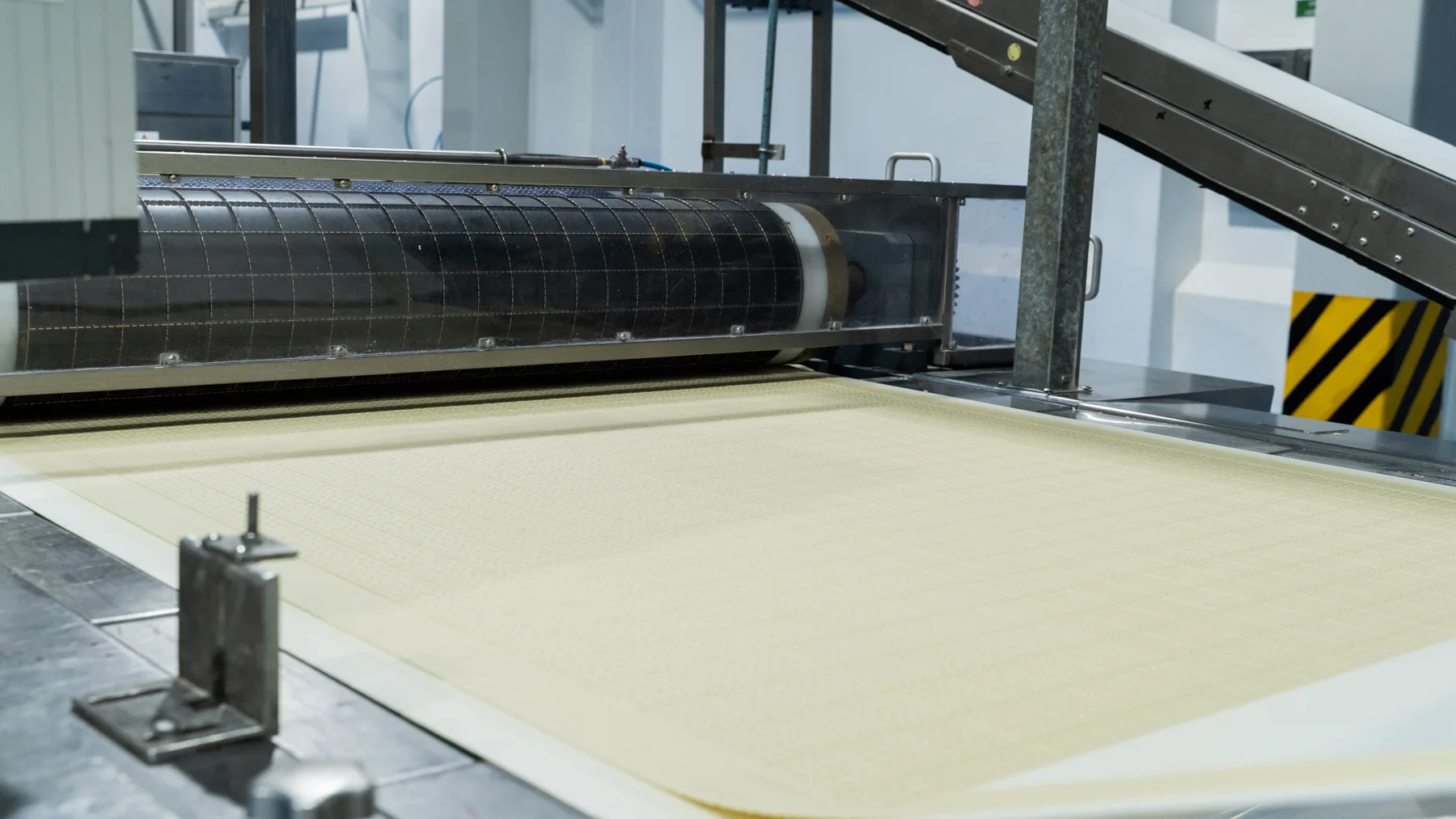
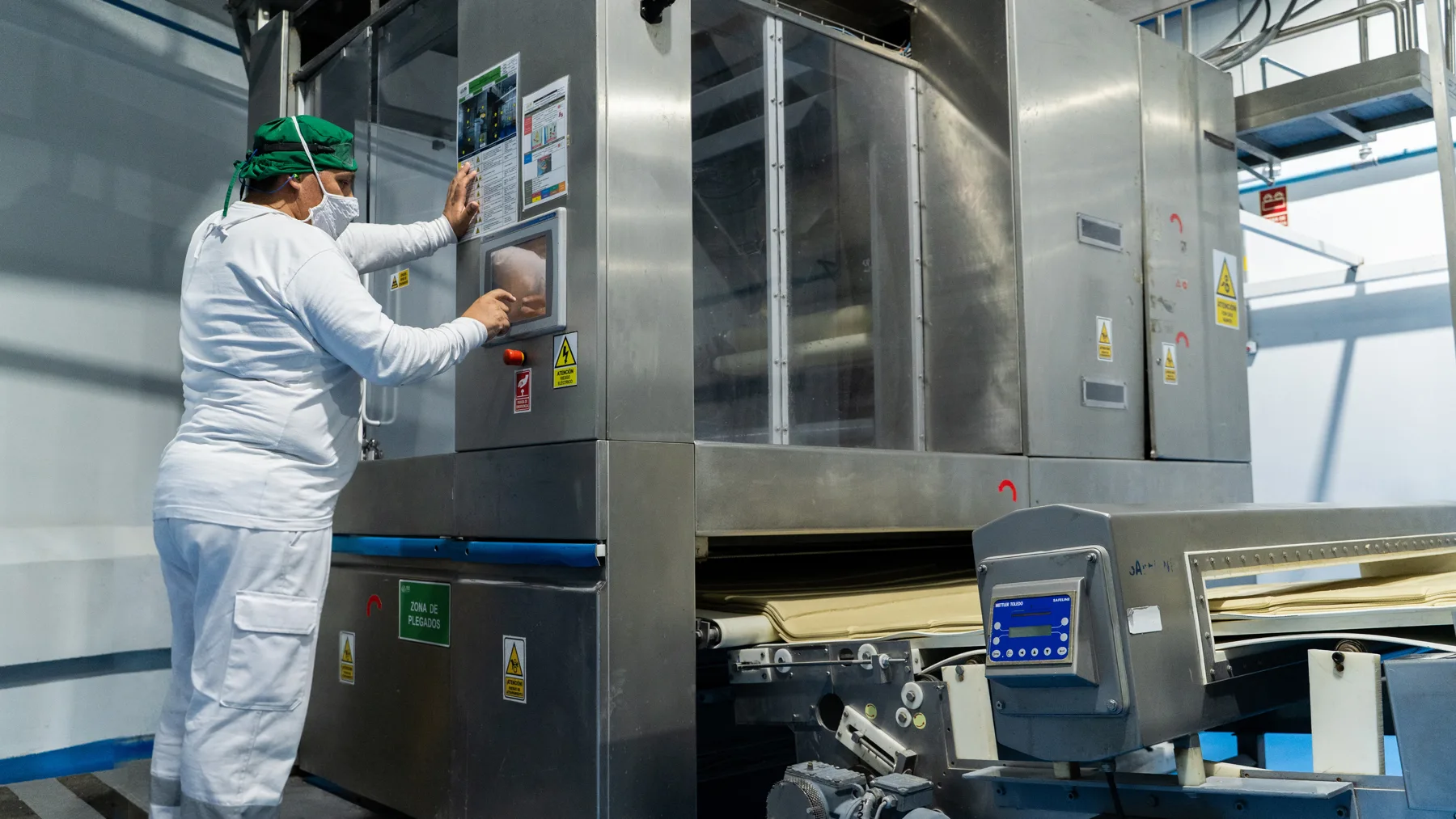
Seasonal production includes Easter eggs in different sizes and presentations to meet individual customer requirements.
Angeles described MPF as ‘a strategic partner’ for customers seeking production across chocolate and adjacent snack categories. On the factory floor, that means being able to adapt combinations of ingredients, textures and formats to a customer’s brief.
Protein and Allergen-Free Production
Protein products are receiving greater attention from the company as it becomes a hot confectionery trend.
Alongside snack bars, the R&D team is investigating protein use in chocolate, truffles, pastes and fillings. Angeles said it is considering both animal-derived and plant-based sources to address different dietary preferences and product-positioning requirements.
She also said the factory has recently installed dedicated machinery and production lines for allergen-free chocolate and snacks.
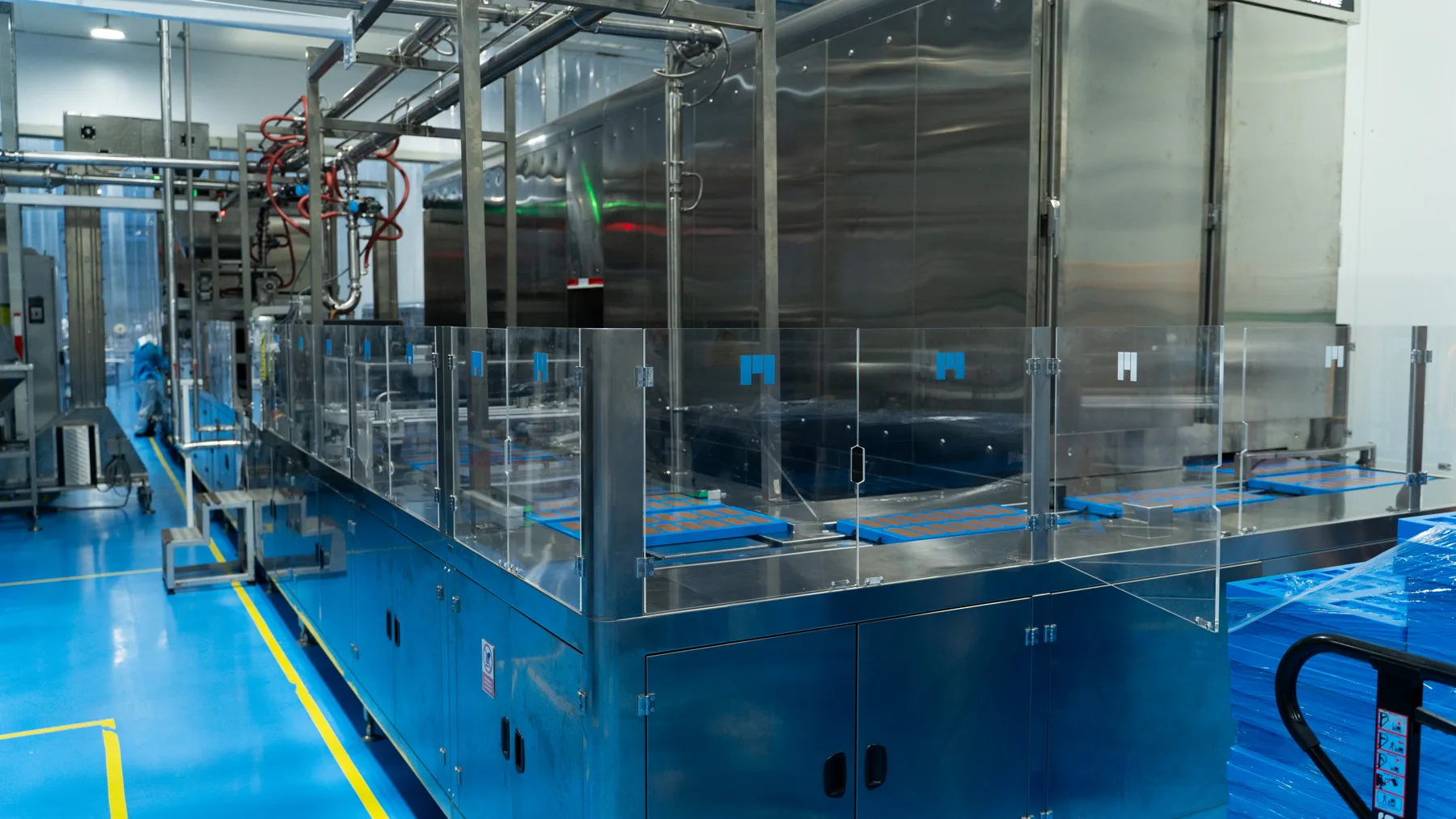
That investment could widen the range of customer briefs MPF can accept. Details of the allergens excluded, segregation procedures and associated certifications were not provided during the interview.
New Lines, Open Questions
MPF says it has installed dedicated machinery and lines for allergen-free chocolate and snacks. The interview did not establish which allergens are excluded, how segregation is managed or which certifications apply.
AI Enters the Development Process
Artificial intelligence is also beginning to feature in the company’s operations.
Angeles said MPF uses AI in logistics and manufacturing, as well as in work on new ingredient formulations. My visit did not establish precisely how those systems are deployed, or whether formulation tools are used routinely in R&D or remain at the trial stage.
Still, for her team, technology sits within a development process that also depends on equipment, ingredient knowledge and the ability to work across categories.
Chocolate becomes a starting point for combinations with wafers, biscuits, fruit, grains, proteins and contrasting fillings. The task is to turn those combinations into products that can be made consistently and meet a customer’s requirements.
Two Factories, One Chain
Pisco and Callao show two sides of MPF’s effort to retain more value beyond selling cocoa beans.
Pisco supplies processing capacity, quality controls and traceability for export markets. Callao turns ingredients into a wider range of finished products, using different production technologies and combinations of ingredients.
Seen together, the factories bring the journey from San Martín into sharper focus. The cocoa I had followed from the growing regions must travel across difficult terrain, pass through laboratory checks and production controls, and emerge as an ingredient or product made to a specific brief.
Capacity and creativity are part of that story. So are traceability, cadmium management, food safety, allergen segregation and compliance across export markets.
Those are the practical demands that will determine whether MPF’s connections with cocoa farmers translate into a lasting commercial advantage – and whether the promise of ‘from farmer to consumer’ holds together across the whole chain.